
How a Mobile App Can Improve Customer Retention
Discover how mobile apps can improve customer retention through loyalty, convenience, bookings, personalised experiences, repeat purchases and useful notifications.
Founder & Principal Technologist
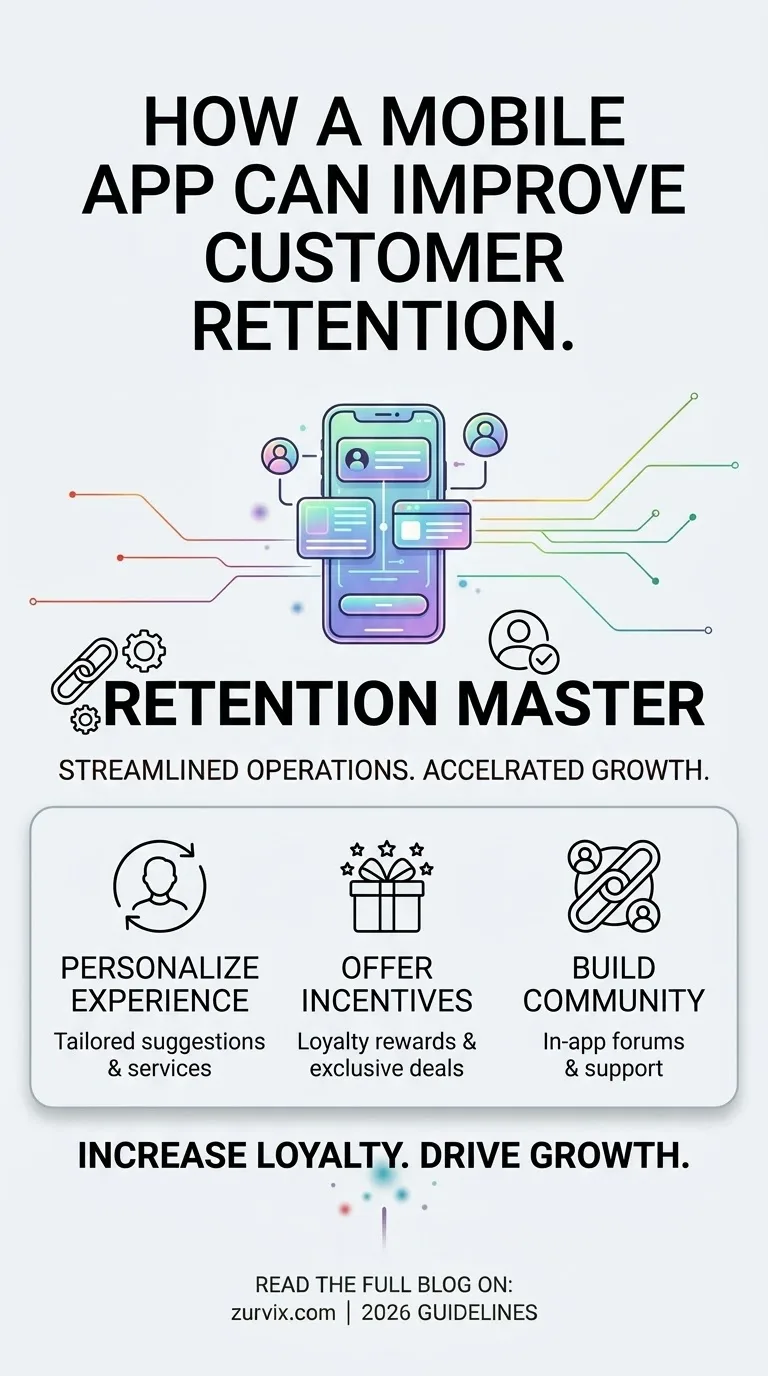
A mobile app can improve customer retention when it gives people a useful reason to come back. An app is not automatically valuable just because it is an app. Its business value comes from convenience, repeat purchases, loyalty, personalised experiences, bookings, account features and other recurring interactions.
This guide explains when a business app makes sense, which features can improve retention, how apps complement websites, and how to measure whether the investment is creating real customer value.
Why Customer Retention Matters
Businesses spend money and effort acquiring customers. Once someone has purchased, booked or subscribed, the next opportunity is to make their future experience easier and more valuable.
An app can support that relationship when customers have a genuine reason to interact with the business repeatedly.
How a Mobile App Can Improve Retention
- Convenience: make repeat actions faster.
- Loyalty: provide points, rewards or member benefits.
- Personalisation: show relevant products, bookings or account information.
- Notifications: send useful reminders, updates and offers with appropriate consent.
- Account history: let customers see orders, bookings or previous activity.
- Faster repeat purchases: reduce steps for customers who already know what they want.
Which Businesses Benefit Most?
Apps are often more suitable for businesses with frequent customer interactions, such as ecommerce, restaurants, fitness businesses, salons, healthcare booking services, membership organisations and loyalty-based retail.
For a business customers use only once or twice a year, a strong mobile website may be a better investment.
App vs Website for Customer Retention
| Need | Website | Mobile App |
|---|---|---|
| Google discovery | Excellent | Limited compared with web search |
| No installation required | Yes | No |
| Frequent repeat use | Good | Potentially excellent |
| Push notifications | Limited | Strong |
| Personal account experience | Strong | Strong |
| Loyalty features | Possible | Very suitable |
For many businesses, the best approach is website for discovery and acquisition, app for retention and recurring engagement.
Useful App Features
Loyalty and Rewards
Digital loyalty programmes can give customers a clear reason to return. Rewards should be easy to understand and genuinely valuable.
Personalised Offers
Relevant recommendations can make the customer experience more useful. Avoid excessive notifications or irrelevant promotions that encourage users to disable communication.
Bookings and Reminders
Appointment-based businesses can allow customers to book, reschedule and receive reminders through the app. This can also reduce repetitive front-desk work.
Order Tracking
Ecommerce and delivery businesses can provide order status, delivery information and support within the app.
Push Notifications Need a Strategy
Push notifications are powerful because they can bring customers back, but sending too many can have the opposite effect. Notifications should be timely, relevant and expected by the user.
Use them for useful updates, reminders, loyalty benefits and relevant offers rather than sending constant promotional messages.
Connect the App With Your Business Systems
An app becomes more useful when it can securely connect with ecommerce, booking, CRM, loyalty, inventory or customer-account systems. The architecture should protect customer data and define appropriate permissions.
How to Measure App Retention
| Metric | Purpose |
|---|---|
| Active users | Shows ongoing usage |
| Repeat purchase rate | Measures recurring buying behaviour |
| Booking frequency | Useful for appointment businesses |
| Retention rate | Shows how many users return over time |
| Revenue per app user | Connects app activity with commercial value |
| Notification engagement | Shows whether messages are useful |
How Much Does a Business App Cost?
Cost depends on platforms, design, user accounts, payments, booking, notifications, integrations, backend systems, security and ongoing maintenance. A simple app and a complex ecommerce or membership platform are very different projects.
Before building an app, estimate the expected retention improvement, repeat revenue or operational saving and compare that value with the total cost of development and operation.
Common App Mistakes
- Building an app without a recurring customer use case
- Copying the website without adding mobile-specific value
- Sending too many notifications
- Making important tasks complicated
- Ignoring accessibility and mobile performance
- Collecting unnecessary customer data
- Launching without a retention measurement plan
Frequently Asked Questions
Can a mobile app really improve customer retention?
Yes, when the app provides genuine recurring value such as faster purchasing, loyalty, bookings, tracking or personalised experiences. An app alone does not guarantee retention.
Does every business need a mobile app?
No. Businesses with infrequent customer interactions may benefit more from a strong responsive website. Apps make more sense when customers have reasons to return regularly.
Are push notifications good for customer retention?
They can be, if messages are useful, relevant and sent with appropriate user permission. Excessive or irrelevant notifications can reduce engagement.
Should I build an app before a website?
For many businesses, a website-first approach is practical because a website is easy to discover through search and requires no installation. An app can follow when recurring usage justifies it.
How do I measure whether my app is successful?
Track retention, active users, repeat purchases, bookings, revenue per user and other metrics connected to your business model. Downloads alone are not enough.
How much does a business mobile app cost?
There is no universal price. Cost depends on features, platforms, integrations, backend systems and ongoing support. A simple app costs less than a complex ecommerce, booking or membership platform.
Can an app connect to my existing website?
Yes. An app can often connect to the same backend, APIs, ecommerce platform, CRM or booking system as a website, provided the architecture supports secure integration.
Can ZURVIX develop a customer retention app?
Yes. ZURVIX can design and develop mobile apps for ecommerce, bookings, loyalty, customer accounts and other recurring business use cases.
Final Takeaway
Build an app because customers need it, not because having an app sounds impressive. When an app makes repeat interactions faster, more convenient or more rewarding, it can become a powerful retention channel.
Need a website and mobile app designed around your customer journey? Explore ZURVIX website and app development services.
Found this useful? Share it with founders and engineering leaders.
Ready to implement these technical standards in your business?
Connect directly with our senior engineering and growth team on WhatsApp for an immediate consultation and bespoke digital roadmap.
Related Reading & Insights:
View all →
How a Dental Website Can Generate More Patient Bookings
Learn how dental websites can build patient trust, improve online booking and support SEO-driven patient acquisition.
How a Service Business Website Generates Leads 24/7
Discover how service businesses can use websites, SEO and conversion-focused design to generate qualified leads around the clock.