
How Dental Websites Turn Website Visitors Into Appointment Requests
Learn how dental practices can turn website visitors into appointment requests with trustworthy treatment pages, clear booking CTAs, local SEO, mobile UX and conversion tracking.
Founder & Principal Technologist

A dental website should do more than look professional. It should help a potential patient understand the practice, feel confident and take the next step toward an appointment.
Getting traffic is only the beginning. The real opportunity is turning relevant visitors into appointment requests while providing clear, trustworthy information throughout the patient journey.
What Makes a Dental Website Convert?
A high-performing dental website answers the questions patients have before contacting a practice: What treatments are available? Who provides them? Where is the clinic? What can I expect? How can I book?
The website should make these answers easy to find on mobile and desktop.
1. Put Appointment Actions Where Patients Can See Them
Use clear calls to action such as Book an Appointment, Request a Consultation or Contact the Practice. Place them near relevant treatment information rather than hiding the only booking link in the navigation.
2. Build Useful Treatment Pages
Patients searching for implants, orthodontics, cosmetic dentistry, hygiene or other treatments often need specific information. Dedicated treatment pages can explain the service, who it may be suitable for, the process, preparation, aftercare and the appropriate next step.
Healthcare content should be accurate and professionally reviewed where appropriate. Avoid exaggerated claims and do not promise medical outcomes.
3. Build Trust Before Asking for an Appointment
- Qualified practitioner profiles
- Real clinic photographs
- Genuine patient reviews where permitted
- Clear treatment information
- Professional accreditations where applicable
- Location and contact information
- Transparent policies and practical patient information
For more context, read How a Professional Website Builds Customer Trust.
4. Make Booking Simple on Mobile
Patients may discover a practice while commuting, working or outside normal opening hours. A mobile-friendly booking experience should use readable text, simple forms and as few unnecessary steps as possible.
5. Use Local SEO to Reach Patients in Your Area
Dental practices usually serve a defined geographic market. Create accurate location and treatment information and maintain eligible local business profiles. Search intent may include phrases such as “dentist near me,” treatment searches and location-based queries.
See Why Dental SEO Matters for Growing a Modern Dental Practice.
6. Answer Common Patient Questions
FAQs can help patients understand appointment preparation, treatment processes, aftercare, payment information and other non-diagnostic questions. They can also make important information easier to discover through conversational search.
7. Make Contact Information Obvious
Show the clinic's phone number, address, opening information and booking route clearly. On mobile, click-to-call can remove an unnecessary step.
8. Track Appointment Conversions
| Metric | What It Shows |
|---|---|
| Organic visits | How patients discover the site through search |
| Treatment-page visits | Which services attract interest |
| Booking starts | How often visitors begin the appointment process |
| Completed enquiries | How many appointment requests are generated |
| Calls | Phone-based conversion activity |
| Qualified appointments | Actual business value from website leads |
9. Improve Website Speed and Accessibility
Large images, unnecessary scripts and poorly optimised pages can make a site harder to use. Optimise images, test mobile performance and make forms and navigation accessible.
Read How Website Speed Affects Business Sales and Customer Experience.
10. Connect the Website to the Wider Patient Acquisition Strategy
SEO, Google Business Profile, social media, paid advertising, email and referrals can all bring people to a dental website. The website should provide the information and conversion path that turns that attention into an appropriate patient enquiry.
What Should a Dental Practice Avoid?
- Unclear or hidden appointment options
- Stock photos that make the practice feel impersonal
- Unverified medical claims
- Outdated opening hours or treatment information
- Very long booking forms
- Poor mobile usability
- Ignoring privacy and patient-data protection
- Measuring traffic without measuring appointment enquiries
Frequently Asked Questions
How can a dental website get more appointment requests?
Make treatment information easy to understand, build trust, use clear booking CTAs, optimise for mobile and local search, answer common questions and track appointment conversions.
What pages should a dental website have?
Most practices benefit from a homepage, treatment/service pages, practitioner/team information, about page, contact/location information, booking route, FAQs and relevant patient education. The exact structure depends on the practice.
Does dental SEO help generate patients?
It can help practices reach people searching for relevant treatments and local dental services. SEO should be combined with trustworthy content and a website that makes booking easy.
Should a dental practice offer online booking?
Online booking can reduce friction for patients who prefer digital scheduling, but the right booking workflow depends on the practice's services, staffing and clinical requirements.
What should a dental treatment page include?
It should provide accurate information about the treatment, who it may be suitable for, the process, practical considerations, FAQs and an appropriate way to contact the practice. Clinical content should be reviewed appropriately.
How do I measure dental website performance?
Track organic visibility, treatment-page engagement, calls, booking starts, completed appointment enquiries and qualified appointments. These are more useful than page views alone.
How important is mobile design for dental websites?
Very important. Patients should be able to read treatment information, find the clinic, call and request an appointment comfortably from a smartphone.
Can ZURVIX build a dental website?
Yes. ZURVIX can design and develop dental and healthcare websites with appointment-focused UX, SEO/GEO foundations, analytics and ongoing maintenance.
Final Takeaway
A dental website should reduce uncertainty and make the next step easy. Build trustworthy treatment content, make booking simple, optimise for local search and measure the journey from discovery to appointment request.
Want a modern dental website designed for patient enquiries? Explore ZURVIX website and digital growth services.
Found this useful? Share it with founders and engineering leaders.
Ready to implement these technical standards in your business?
Connect directly with our senior engineering and growth team on WhatsApp for an immediate consultation and bespoke digital roadmap.
Related Reading & Insights:
View all →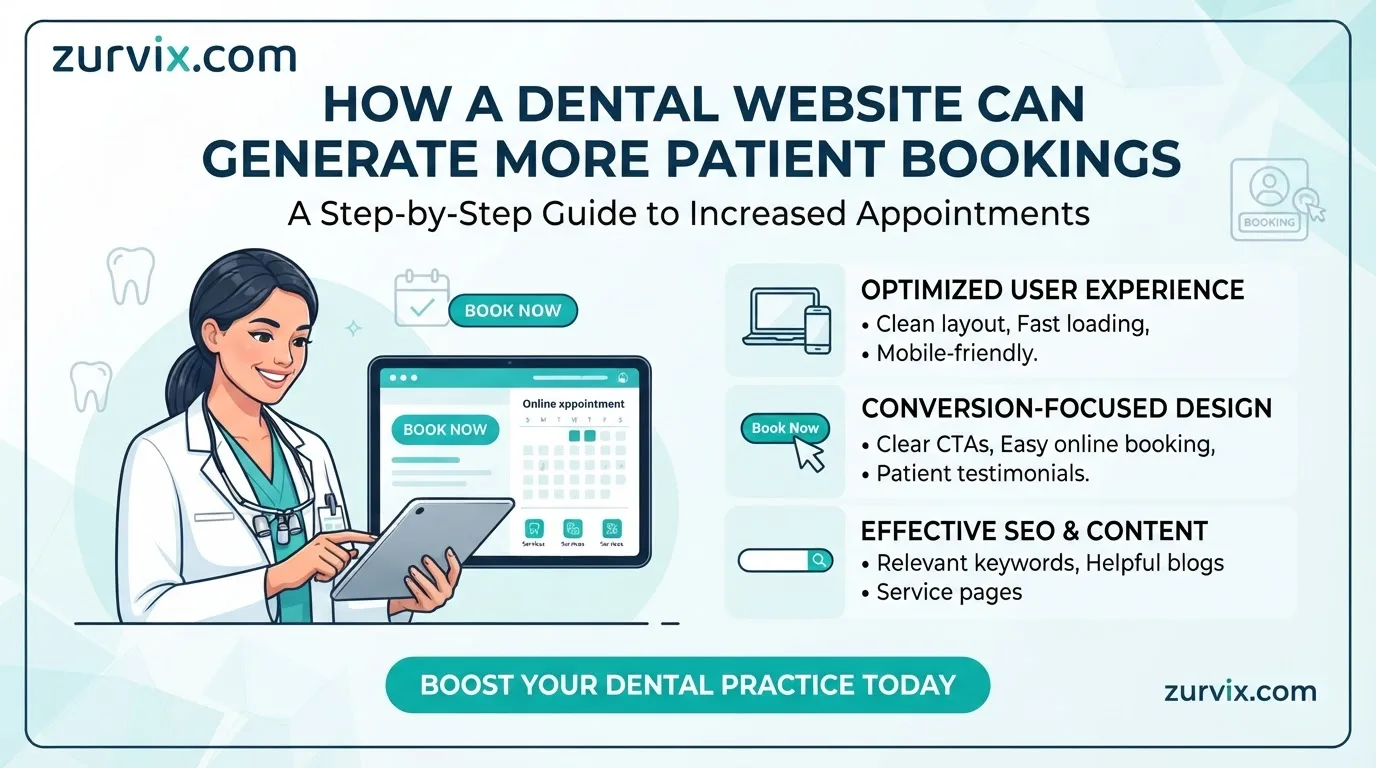
How a Dental Website Can Generate More Patient Bookings
Learn how dental websites can build patient trust, improve online booking and support SEO-driven patient acquisition.

How a Service Business Website Generates Leads 24/7
Discover how service businesses can use websites, SEO and conversion-focused design to generate qualified leads around the clock.