
How Email Marketing Helps Businesses Turn Leads Into Customers
Learn how email marketing can nurture leads, support sales, increase repeat purchases and improve customer retention with practical campaigns and ROI measurement.
Founder & Principal Technologist
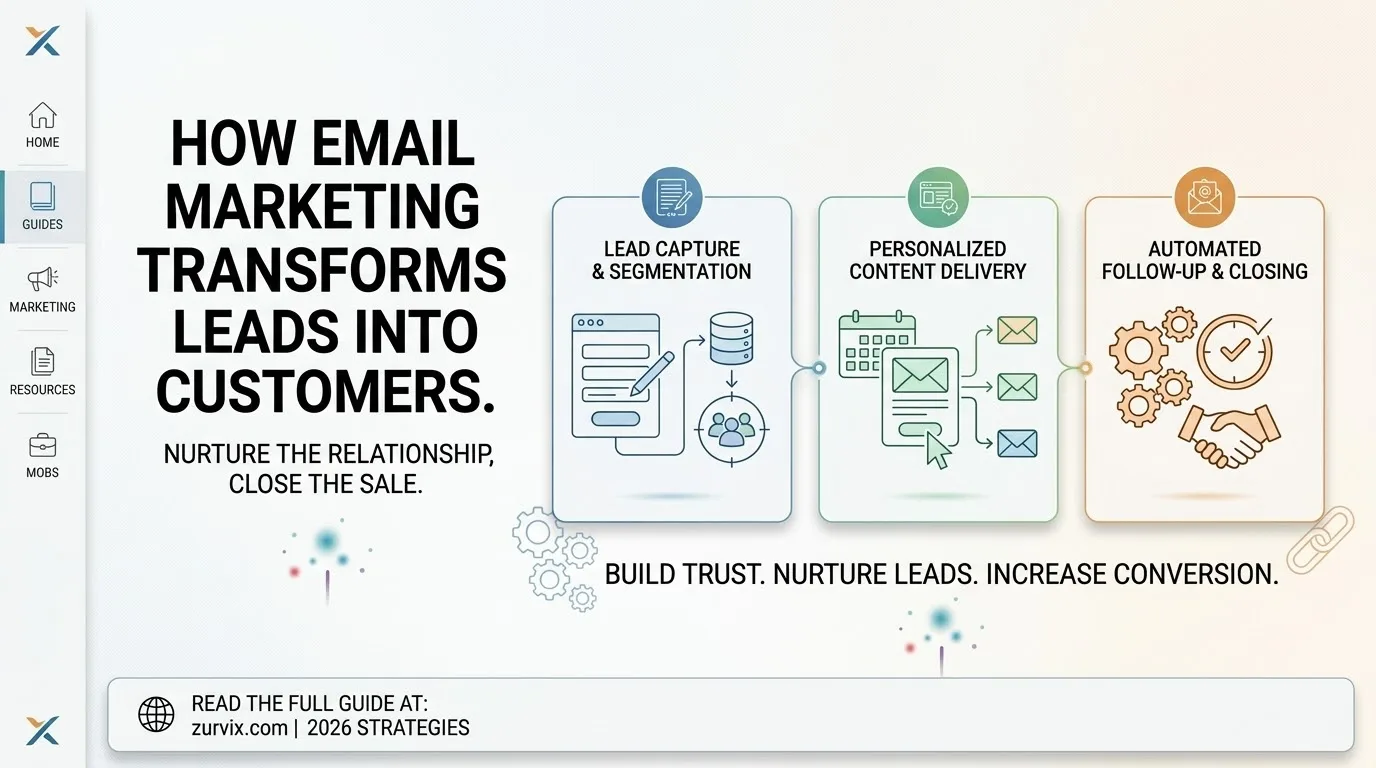
Email marketing works best when it helps a customer at the right moment. Instead of sending the same promotion to everyone, businesses can use email to welcome new subscribers, nurture enquiries, educate prospects, support purchases and encourage repeat business.
This guide explains how email marketing turns leads into customers, which campaigns are most useful, how to connect email with your website and how to measure real ROI.
Why Email Marketing Still Matters
Someone who joins your email list, requests information or purchases a product has already shown interest. Email gives you a direct channel for continuing that relationship, subject to appropriate consent and privacy requirements.
Where Email Fits in the Customer Journey
A practical journey can look like website visit → signup or enquiry → useful follow-up → consideration → purchase → post-purchase communication → repeat purchase.
Email does not replace SEO, social media or a website. It connects them by giving interested people reasons to return.
Useful Email Campaigns for Businesses
- Welcome sequence: introduce the business and explain what subscribers can expect.
- Lead nurturing: answer common questions and help prospects evaluate a service.
- Educational emails: share guides, tips and useful resources.
- Product campaigns: introduce relevant products, launches or offers.
- Abandoned-cart reminders: remind shoppers about products they left behind where appropriate.
- Post-purchase emails: provide delivery, usage or support information.
- Reactivation: give inactive customers a useful reason to return.
Connect Email With Your Website
Your website can be the source of useful customer signals: forms, downloads, bookings, purchases and product interests. Connecting these signals to email segmentation can make communication more relevant.
For example, someone who downloads a guide about ecommerce may need educational content, while an existing customer may need product support or a relevant repeat-purchase reminder.
Personalisation Without Overcomplication
You do not need complicated AI to make emails more relevant. Start with basic segments such as new subscribers, existing customers, service enquiries, product category interest or inactive customers.
Write Emails People Actually Want to Open
Good email copy is clear and useful. Avoid misleading subject lines, excessive urgency and messages that provide no value. One email should have a clear purpose and an obvious next action.
Email Marketing for Different Businesses
| Business | Useful Email Examples |
|---|---|
| Ecommerce | Product launches, cart reminders, recommendations, post-purchase and repeat-purchase campaigns |
| Service business | Lead nurturing, educational content, quotes, follow-ups and appointment reminders |
| Restaurant | Events, menus, offers, reservations and loyalty communication |
| Dental/healthcare | Appointment communication, service education and appropriate follow-ups |
| B2B | Case studies, guides, newsletters, lead nurturing and consultation invitations |
Email and Conversion-Focused Websites
Your email campaign needs somewhere useful to send people. A focused landing page is often better than sending every campaign to the homepage.
See How to Build a Digital Marketing Funnel for a Small Business and How Service Businesses Can Get More Leads From Their Website.
Privacy and Consent Matter
Businesses should collect and use email addresses according to applicable privacy and electronic-marketing rules. Keep records of consent where required, explain how data is used and provide appropriate unsubscribe mechanisms. For European businesses, review applicable GDPR and ePrivacy requirements and obtain professional legal advice for your specific situation.
How to Measure Email Marketing ROI
| Metric | Why It Matters |
|---|---|
| Delivery rate | Shows whether messages reach recipients |
| Open rate | Provides a directional signal of engagement, with measurement affected by modern privacy features |
| Click-through rate | Shows whether content drives action |
| Conversion rate | Connects campaigns to desired outcomes |
| Revenue | Measures commercial contribution |
| Unsubscribe rate | Highlights possible relevance or frequency problems |
Do not judge a campaign only by opens. For a business, clicks, qualified leads, bookings, purchases and revenue are usually more meaningful.
Common Email Marketing Mistakes
- Sending emails without a clear purpose
- Buying email lists
- Sending the same message to every subscriber
- Ignoring mobile email readers
- Using misleading subject lines
- Making unsubscribe difficult
- Sending people to irrelevant pages
- Measuring opens while ignoring sales or leads
How Much Does Email Marketing Cost?
Costs can include email software, contact volume, campaign creation, copywriting, design, automation and integrations. A small business can start with a simple platform and a few useful campaigns before investing in advanced automation.
Frequently Asked Questions
Is email marketing still effective for small businesses?
Yes. It can be useful for nurturing interested prospects, communicating with customers and encouraging repeat business, provided messages are relevant and sent appropriately.
How often should a business send emails?
There is no universal frequency. Send often enough to remain useful but not so frequently that subscribers feel overwhelmed. Monitor engagement and unsubscribes and adjust based on audience expectations.
Can email marketing generate sales?
Yes. Product campaigns, lead nurturing, cart reminders and retention campaigns can contribute to sales. Measure conversions and revenue rather than relying on engagement metrics alone.
Should I buy an email list?
No. Purchased lists can create poor engagement, reputation problems and compliance issues. Build an audience through legitimate, permission-based acquisition methods.
Do I need a website for email marketing?
A website is not strictly required for every email activity, but it provides valuable destinations such as product pages, landing pages, booking forms and educational content. Email and website work well together.
What is the best email campaign for a new lead?
A useful welcome or nurturing sequence is often a good starting point. Explain what the business offers, answer common questions and guide the prospect toward the appropriate next step.
How do I measure email ROI?
Track conversions, qualified leads, purchases and revenue attributable to campaigns, then compare the value generated with the cost of software, content and campaign management.
Can ZURVIX help with email marketing?
Yes. ZURVIX can help connect websites, lead-generation systems, content, email workflows and digital marketing into a measurable customer acquisition and retention strategy.
Final Takeaway
Email marketing is most powerful when it continues a useful customer conversation. Build permission-based lists, segment where it helps, provide useful content, send people to relevant website pages and measure business outcomes.
Want a website and digital marketing system that turns visitors into leads and customers? Explore ZURVIX digital marketing services.
Found this useful? Share it with founders and engineering leaders.
Ready to implement these technical standards in your business?
Connect directly with our senior engineering and growth team on WhatsApp for an immediate consultation and bespoke digital roadmap.
Related Reading & Insights:
View all →
How a Dental Website Can Generate More Patient Bookings
Learn how dental websites can build patient trust, improve online booking and support SEO-driven patient acquisition.
How a Service Business Website Generates Leads 24/7
Discover how service businesses can use websites, SEO and conversion-focused design to generate qualified leads around the clock.