
Website vs Facebook Page: What Does a Business Really Need?
Website or Facebook Page? Compare what each channel does best, why relying only on social media can limit growth, and how businesses can combine social media, SEO, AI search and an owned website to generate trust, leads and sales in 2026.
Founder & Principal Technologist
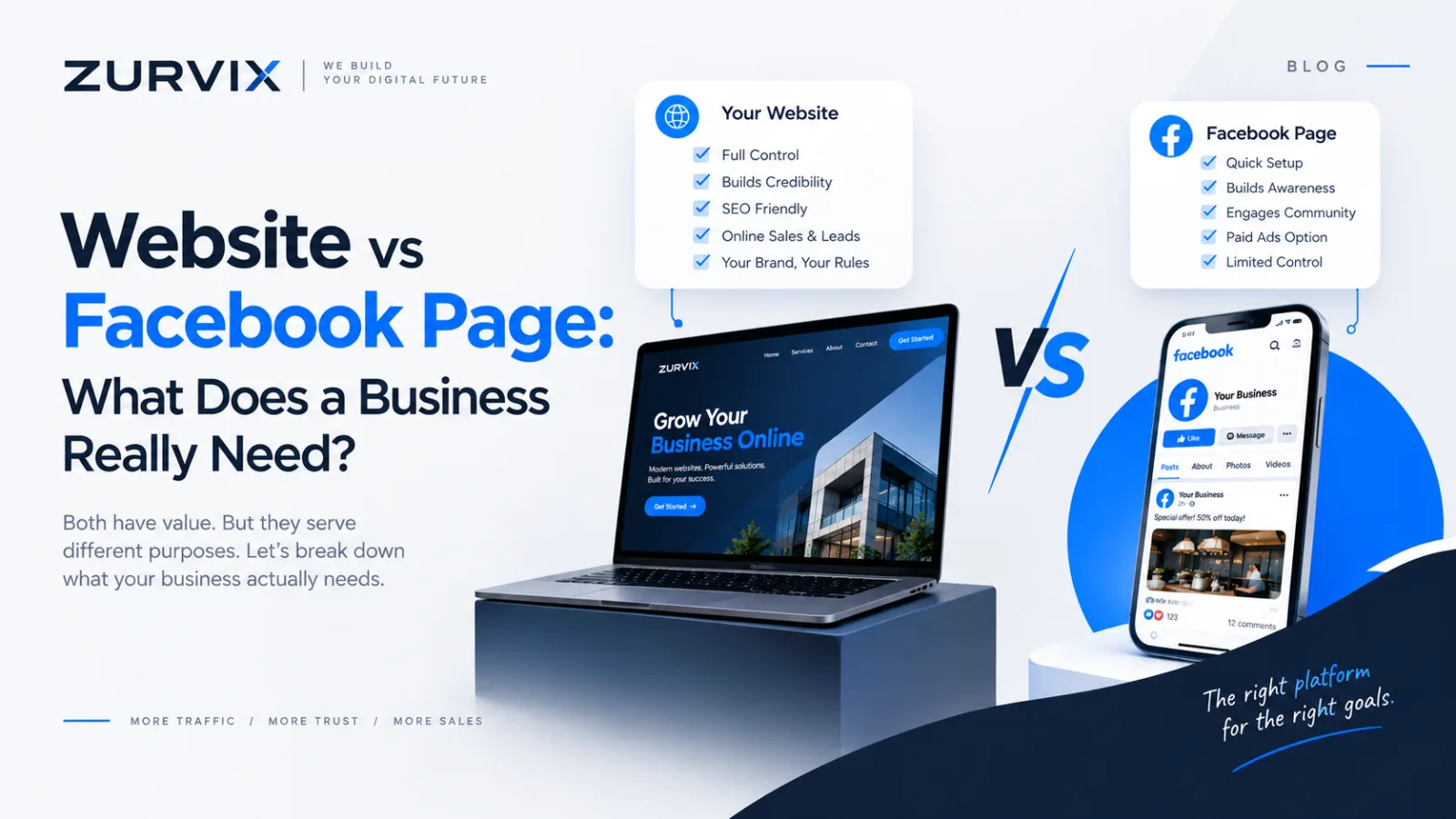
Do you really need a website if your business already has a Facebook Page? It is a fair question. A Facebook Page can help a business reach people, publish updates, answer messages, collect reviews and run advertising. For some businesses, it may even be the first place customers discover them.
But a Facebook Page and a business website are not the same thing. They solve different problems, and in 2026 the smartest approach for most businesses is not website or Facebook. It is website + social media, with each channel doing the job it is best at.
This guide explains the real difference, where each channel fits in the customer journey, why relying only on Facebook can create limitations, and how a small business can build a practical digital presence without wasting money.
The Short Answer
Use Facebook to reach people. Use your website to build the destination you control.
Facebook is excellent for attention, community, conversations, social proof, advertising and fast content distribution. Your website is better suited to owning your business information, building search visibility, explaining services or products in depth, generating leads, taking bookings or orders, and creating a customer journey designed around your goals.
Facebook Page vs Website: The Big Difference
| Business need | Facebook Page | Business website |
|---|---|---|
| Reach and discovery | Strong | Strong through search and referrals |
| Community and conversation | Excellent | Possible, but usually not the main purpose |
| Control over layout and content | Limited | High |
| Search-focused content | Limited | Strong foundation |
| Detailed service/product information | Possible, but constrained | Excellent |
| Lead-generation landing pages | Limited | Highly customizable |
| Ecommerce and checkout | Platform-dependent | Highly customizable |
| Customer journey control | Limited | High |
| Digital ownership | Third-party platform | Owned digital asset |
The important word is control. With a website, you decide what customers see, how information is organized, what the next action is, and how different marketing channels connect to the customer journey.
What a Facebook Page Does Really Well
1. It Helps You Get Attention Quickly
Facebook is built around content discovery and interaction. Businesses can publish photos, videos, offers, announcements, customer stories, events and short updates without asking people to visit another site first.
Current 2026 marketing research still shows Facebook as a major business channel. HubSpot's 2026 State of Marketing data places Facebook among the most leveraged platforms for brands, while its social media research highlights Facebook's role in reach, community and marketing. HubSpot's 2026 Social Media Marketing Report
2. It Is Useful for Community
Comments, messages, groups and reactions create direct interaction. For local businesses, this can be particularly useful when customers want quick answers or recommendations.
3. It Can Support Advertising
Paid social campaigns can help businesses reach specific audiences and test offers, creatives and messages. Facebook and Instagram can therefore play an important role in demand generation.
4. It Gives Customers a Familiar Place to Contact You
Some customers prefer sending a message instead of filling out a traditional contact form. A Facebook Page can make that conversation feel immediate and familiar.
5. It Is Useful for Social Proof
Customer comments, reviews, photos and conversations can help potential buyers see that other people interact with the business.
So yes, Facebook is valuable. The mistake is assuming that valuable means sufficient.
Why a Facebook Page Is Not a Complete Business Website
1. You Do Not Control the Platform
Your Page exists inside Meta's ecosystem. Features, layouts, policies, algorithms and distribution can change without your business deciding when or how.
This does not mean Facebook is unsafe or useless. It means it should be treated as a marketing channel rather than the only foundation of your digital presence.
2. Your Content Competes Inside a Feed
On social media, a customer is surrounded by other posts, videos, ads, conversations and recommendations. Even if you publish something useful, the customer may scroll past it.
A website works differently. When someone reaches a dedicated service page, product page or landing page, you can control the environment and guide the visitor toward the next step.
3. Your Information Can Become Scattered
A Facebook Page may contain your latest post, another post may contain your price, a comment may contain an answer, and an old image may show outdated opening hours.
A website lets you create one clear source for important information: services, products, prices, policies, locations, booking options, FAQs and contact details.
4. You Have Less Freedom Over Customer Journeys
A social profile is not designed to give every business complete control over the path from problem to solution.
On a website you can create a deliberate flow such as:
Search or social post → relevant page → explanation → proof → offer → CTA → enquiry, booking or purchase.
5. Non-Branded Search Matters
People do not always search for your company name. They search for what they need: emergency dentist, commercial cleaning company, website development company, restaurant near me, home renovation contractor, accountant for small business or a product they want to buy.
A website gives you a stronger foundation for creating dedicated pages that answer these customer needs.
What About Google Search?
Search is one of the biggest reasons a business should not rely only on a social profile.
Your website can contain dedicated pages for important services, products, locations, customer questions and educational topics. Those pages can be internally linked and optimized around real search intent.
Modern SEO is not simply keyword stuffing. It involves useful content, technical accessibility, clear page structure, internal links, strong user experience and accurate business information.
Google's current Search documentation continues to cover search appearance, structured data and AI features. Google also says existing SEO fundamentals remain relevant to its generative AI search experiences. Google Search Central: 2026 documentation updates
For a broader explanation of why websites remain important, read Why Every Business Needs a Website in 2026.
Social Media and AI Search in 2026
People are discovering information across more surfaces than before: Google, AI-powered search, social platforms, maps, video platforms, online communities and recommendations.
Google has added guidance around analyzing social and video platform content performance in Search Console, showing how these channels increasingly intersect with search discovery. Google Search documentation updates
Do not interpret AI search as a reason to create hundreds of artificial pages or chase a secret GEO trick. The practical approach is simpler: publish original, useful information, make business facts clear, demonstrate real expertise, maintain technical SEO fundamentals and make important information accessible.
Your website should be the reliable information hub. Your social channels can help distribute and discuss that information.
What Is GEO and Why Does It Matter?
GEO, often used for Generative Engine Optimization, describes efforts to improve the usefulness and discoverability of content in generative search experiences.
There is no guaranteed formula that forces an AI system to recommend your business. Focus instead on things that are valuable in both traditional and AI-assisted discovery:
- Clear descriptions of what you actually do
- Original information and first-hand experience
- Useful answers to customer questions
- Consistent company, service and location information
- Logical headings and page structure
- Strong internal linking
- Relevant structured data
- Fast, mobile-friendly pages
- Real examples, case studies and reviews
Can Facebook Drive Traffic to Your Website?
Absolutely. This is one of the best ways to use the two channels together.
Imagine a dental clinic publishes a short Facebook video about teeth whitening. The post creates interest and links to a dedicated teeth-whitening page on the website.
That page can explain who the treatment is for, how it works, expected results, common questions, pricing or consultation information, patient reviews and appointment options.
Facebook has done what it is good at—creating attention—and the website has done what it is good at—providing depth and conversion.
The Best Strategy: Build a Digital Funnel
Stage 1: Discovery
Customers may discover you through Facebook, Instagram, TikTok, Google, YouTube, referrals, ads or AI-powered search.
Stage 2: Research
They want to understand who you are, what you offer, how much it costs, whether you are trustworthy and whether you are a good fit.
Stage 3: Conversion
They call, book, request a quote, start a chat, subscribe or purchase.
Stage 4: Retention
You use email, social content, customer accounts, remarketing and good service to encourage repeat business.
Your website can support all four stages, while social media is particularly powerful for discovery, engagement and community.
What Should a Business Website Actually Include?
You do not need a massive website. You need the right information.
- Homepage: explain what you do and who you help.
- Service/product pages: give each important offer enough space to be understood.
- About page: show the people and story behind the business.
- Trust signals: reviews, testimonials, case studies, certifications or real project examples where appropriate.
- Contact page: make contact simple.
- FAQ: answer common customer questions.
- Location/service-area information: make geographic coverage clear.
- Blog/resource section: publish genuinely useful information when it supports customers and search visibility.
For more on what a website should achieve, read How a Service Business Website Generates Leads 24/7.
Facebook Page + Website for Different Businesses
Restaurants and Cafes
Facebook: promotions, photos, videos, events, community and announcements.
Website: menu, opening hours, location, reservations, online ordering and private events.
Dental Clinics
Facebook: educational posts, team updates, patient-friendly content and community engagement.
Website: treatment pages, dentist profiles, FAQs, appointment requests and patient education.
Service Businesses
Facebook: local awareness, before-and-after content, offers and customer interaction.
Website: service pages, service areas, case studies, testimonials, quote forms and SEO-focused content.
E-commerce Businesses
Facebook: product discovery, campaigns, videos, promotions, social proof and retargeting.
Website: product catalogue, search, filters, product details, checkout, payments, customer accounts, order tracking and retention.
Read Why Every E-commerce Business Needs Its Own Website and How to Build an E-commerce Website That Converts Visitors Into Customers.
Professional Services
Law firms, consultants, accountants and other professional firms often need a website to explain expertise, services, experience, credentials, industries served and how potential clients can start a conversation.
What If I Have a Very Small Budget?
You do not need to build everything at once.
- Secure a professional domain.
- Build a simple, fast business website.
- Clearly explain your most important services or products.
- Add strong contact and conversion options.
- Set up analytics and search basics.
- Create or improve your Facebook Page.
- Connect relevant social posts to useful website pages.
- Improve the site as customer demand grows.
A small website that clearly generates enquiries is often more useful than a large website full of pages nobody reads.
If you are comparing budgets, see How Much Does a Business Website Cost in 2026?.
What If My Facebook Page Already Gets Customers?
That is actually a good sign. If Facebook is already generating customers, you have evidence that your audience is online. The next question is whether you can make that customer journey stronger and less dependent on one platform.
Instead of sending every customer directly to Messenger, you could use your website for detailed service information, booking forms, quote requests, product catalogues, pricing explanations, case studies, FAQs, email subscriptions and online payments.
You are not replacing something that works. You are adding another layer of control and capability.
What If I Only Have a Website and No Social Media?
That can work too. Not every company needs to be active on every platform. A B2B consultancy may get more value from LinkedIn and search. A restaurant may benefit heavily from Instagram and Facebook. An ecommerce brand may prioritize Instagram, TikTok, search and email.
The goal is not to collect social profiles. The goal is to choose channels that reach your actual customers.
HubSpot's 2026 research emphasizes that platform choice should depend on audience and goals rather than trying to be everywhere. HubSpot: How to create a social media strategy in 2026
Does a Website Cost More Than a Facebook Page?
A Facebook Page can be created without the same upfront development investment as a professional website. But comparing only the initial price misses the business value of what each platform provides.
A website may involve domain, hosting, design, development, content, SEO and maintenance. In return, it can become an owned digital asset that supports search, marketing, sales, bookings, ecommerce and customer service.
A social presence may have lower initial setup costs, but you are operating within another company's platform and rules.
The right comparison is not free versus paid. It is cost versus business value.
Do I Need Both Facebook and a Website?
For many customer-facing businesses, yes—but not because every business must post every day.
- Website: central information and conversion hub.
- Facebook: reach, community, updates, advertising and conversation.
- Instagram: visual discovery and engagement where relevant.
- Google Business Profile: local discovery and business information where eligible.
- Email: direct communication and retention.
- Other channels: selected according to your audience.
This creates a connected ecosystem rather than forcing one platform to do everything.
A Simple Example
Imagine a home renovation company. They publish a Facebook post showing a completed kitchen renovation. Someone sees it and becomes interested. The post links to a website case study showing the project, materials, process, photos, customer testimonial and a quote form. The visitor submits the form. The company receives a qualified lead.
That is a much stronger journey than asking the customer to scroll through dozens of old Facebook posts looking for information.
The Website Should Be the Source of Truth
One of the simplest rules a business can follow is this:
Put important, changing information on your website first.
Then distribute it through social media.
If your opening hours change, update the website and your business profiles. If you launch a new service, create the service page first. If you publish a useful guide, share it on social media.
This reduces information gaps and gives customers one reliable destination.
Do Social Media Posts Help SEO?
Social activity can support awareness, referral traffic and content distribution, but businesses should not assume that simply getting likes on Facebook directly guarantees higher organic rankings.
Instead, use social media to get useful content in front of people who may read, share, mention or link to it. Then use your website to provide the complete resource.
Google's current documentation recognizes the importance of understanding social and video content performance, while its Search guidance continues to emphasize useful content and technical accessibility. Google Search Appearance documentation
Don't Build a Website Just Because Everyone Says You Need One
This may sound strange coming from a digital agency, but it matters.
A website is valuable when it solves a business problem. If you build a website that nobody can navigate, nobody can find, nobody trusts and nobody knows how to use, simply having one does not create growth.
The website needs a job. Maybe its job is generating quote requests. Maybe it sells products. Maybe it books appointments. Maybe it explains complex services. Maybe it supports an international sales team.
Define the job first. Then build the website around it.
How to Measure Whether Your Website Is Working
Do not judge your website only by visitor numbers. Track meaningful actions such as qualified enquiries, quote requests, phone clicks, bookings, purchases, email subscriptions, downloads, contact-form completion, conversion rate and revenue influenced by the website.
For a deeper framework, read How to Calculate the ROI of a Business Website.
2026 Trend: Social Discovery + Owned Conversion
One of the most practical digital strategies for 2026 is to stop treating channels as competitors.
Social media is excellent at getting content into people's attention. Search is excellent at capturing existing intent. Email is excellent for retention. Websites are excellent at giving businesses a controlled place to explain, convert and serve customers.
HubSpot's 2026 research shows social media remains a major part of marketing, while website/blog/SEO also remains highly important. The lesson is not that one channel has won. The lesson is that businesses need connected customer journeys. HubSpot 2026 State of Marketing
Frequently Asked Questions
Can a Facebook Page replace a business website?
For some very small businesses, a Facebook Page may be a useful starting point. But it does not provide the same level of control, search-focused content structure, customer journey flexibility and functionality as an owned website. For most growing businesses, using both is stronger.
Is a website better than Facebook?
Neither is universally better. They have different jobs. Facebook is strong for reach, engagement, community and advertising. A website is strong for owned information, search visibility, conversion, ecommerce, bookings and long-term digital infrastructure.
Do I need a Facebook Page if I have a website?
Not necessarily. Choose social platforms based on where your customers actually spend time. If Facebook is relevant to your audience, it can be a useful distribution and community channel alongside your website.
Can Facebook send customers to my website?
Yes. Social posts, advertisements, profile links, videos and campaigns can direct people to relevant website pages. The destination should match the message so the visitor does not have to search for the information again.
Will having a website automatically make my business rank on Google?
No. A website creates a foundation for search visibility, but rankings depend on many factors including relevance, content quality, competition, technical accessibility, authority and user experience.
Is social media enough for local businesses?
Social media can be very useful for local businesses, but a website can provide a more complete source of services, location information, opening details, FAQs, bookings and lead-generation content. Google Business Profile can also be important for eligible local businesses.
Should my website link to Facebook and Instagram?
Usually yes, when those channels are active and useful to customers. Social links can help visitors find your community and content. Just make sure the website still provides the important business information rather than sending every visitor away immediately.
Can I start with Facebook and build a website later?
Yes. Many businesses do. If Facebook is already generating attention, use that audience to learn what questions customers ask and what services generate interest. Those insights can help you build a better website later.
Should I put my prices on my website instead of Facebook?
It depends on the business. Where pricing is straightforward, publishing it can reduce friction and improve lead quality. Where every project is custom, explain starting prices or the factors that affect cost and provide a clear quote process.
How much should I spend on a website?
Spend according to the business outcome you need. A simple service website may require a modest budget, while ecommerce, booking systems and custom applications require more. The goal is not the biggest website; it is the smallest effective system that can achieve your business goal.
Final Verdict: Website or Facebook Page?
If you can only choose one today, choose based on your business goal.
If you mainly need a temporary social presence and your audience is already active there, a Facebook Page can be a useful starting point.
If you want a long-term digital asset that can support Google search, AI-assisted discovery, detailed information, lead generation, bookings, ecommerce and a controlled customer journey, build a website.
But for most serious businesses, the strongest answer is not website vs Facebook.
It is:
Website + Facebook + the right channels for your customers.
Use social media to create attention. Use your website to turn that attention into understanding, trust and action.
That is the digital strategy that makes more sense in 2026.
Want to build a website that actually supports your business? ZURVIX provides website and app design, development, digital marketing, SEO/GEO and website maintenance, with solutions built around what the business actually needs.
Found this useful? Share it with founders and engineering leaders.
Ready to implement these technical standards in your business?
Connect directly with our senior engineering and growth team on WhatsApp for an immediate consultation and bespoke digital roadmap.
Related Reading & Insights:
View all →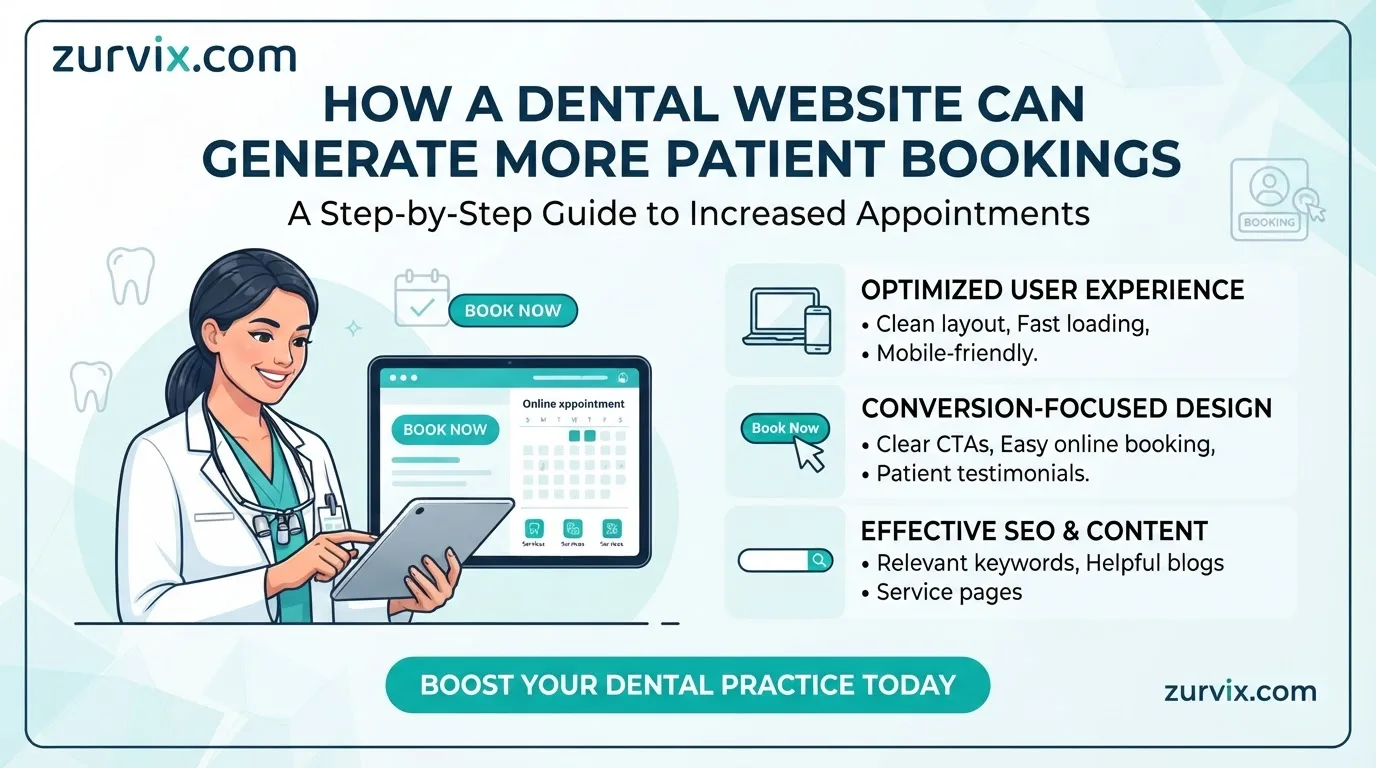
How a Dental Website Can Generate More Patient Bookings
Learn how dental websites can build patient trust, improve online booking and support SEO-driven patient acquisition.
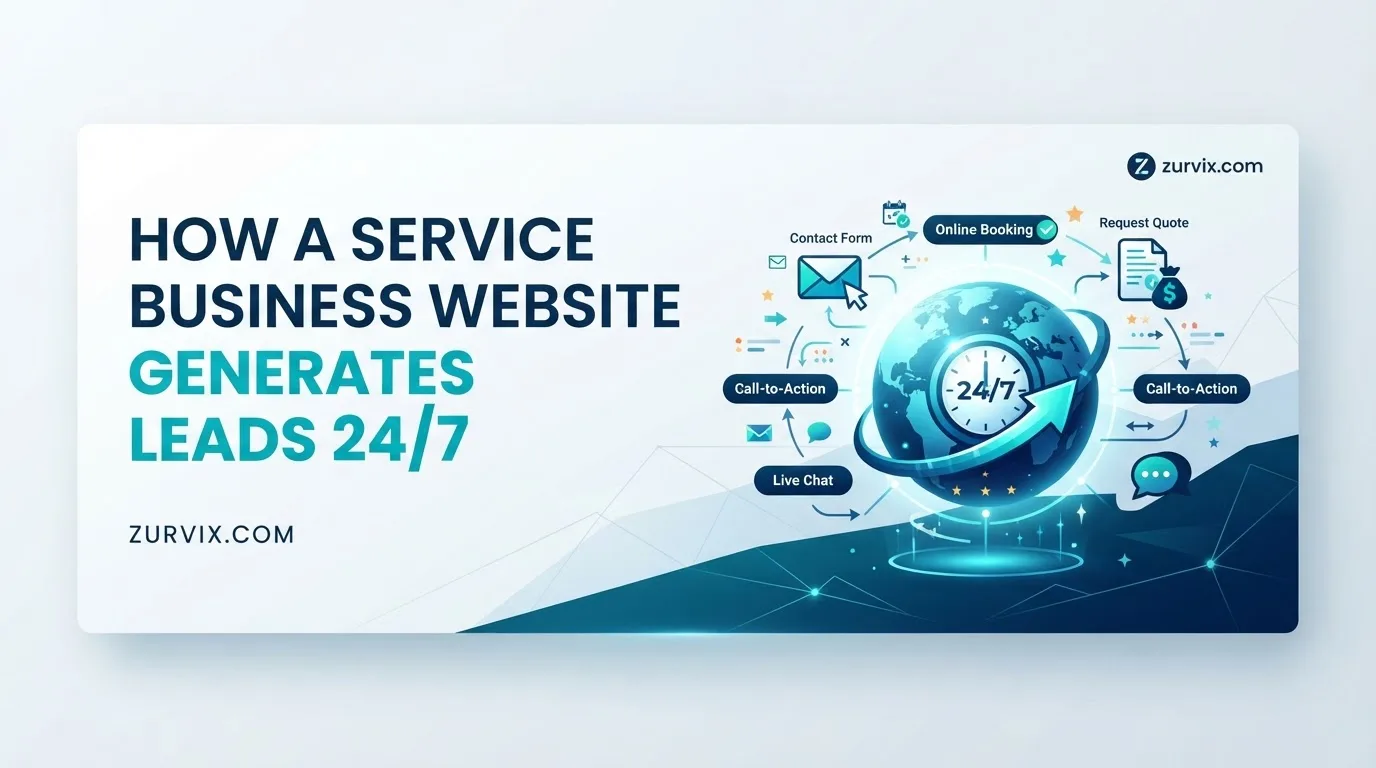
How a Service Business Website Generates Leads 24/7
Discover how service businesses can use websites, SEO and conversion-focused design to generate qualified leads around the clock.